 Panacea Bio Chem — Technical Specification
Redox Biology · Rev. 2026‑07
Panacea Bio Chem — Technical Specification
Redox Biology · Rev. 2026‑07
Panacea Bio Chem — Technical Specification
Redox Biology · Rev. 2026‑07
Panacea Bio Chem — Technical Specification
Redox Biology · Rev. 2026‑07
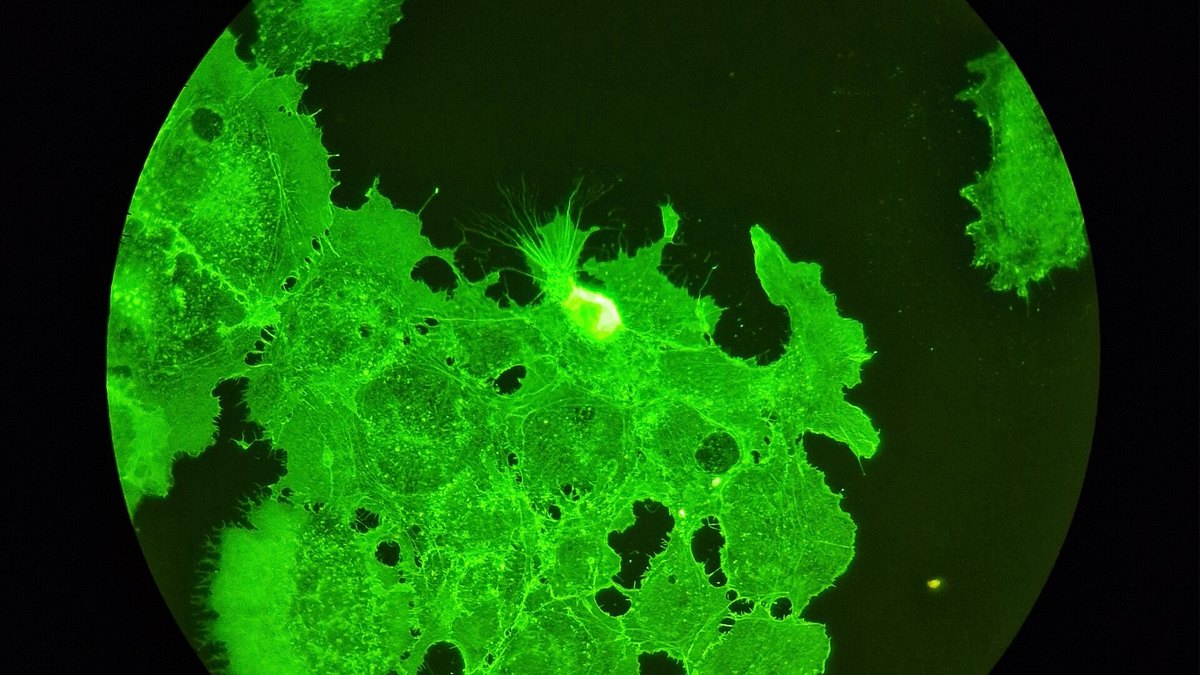
Reactive oxygen species (ROS) — among them superoxide (O₂•−), its protonated partner the hydroperoxyl radical (HO₂•)2 and hydrogen peroxide (H₂O₂) — are among the body's most precise chemical messengers. Far from being mere by-products, controlled amounts of ROS run redox signalling1: they tell cells when to grow, differentiate and adapt; they arm the immune oxidative burst that clears pathogens4; and at low, trained doses they strengthen cells through hormesis7. This page explains the beneficial side of reactive oxygen — and where Panacea Bio Chem's redox-balance work fits.
For a long time reactive oxygen was described only as exhaust. The modern picture is richer and more useful: cells make small, deliberate amounts of reactive oxygen species and read them as a language. This is redox signalling — the same logic as a hormone or a nerve impulse, but written in oxygen chemistry1.
The alphabet is short. Superoxide (O₂•−) is an oxygen molecule carrying one extra electron; add a hydrogen ion and it becomes the hydroperoxyl radical (HO₂•), its neutral partner, the two sitting in an acid–base balance around pKa 4.82. An enzyme called superoxide dismutase (SOD)6 then converts superoxide into hydrogen peroxide (H₂O₂) — the family's main messenger, because it is mild, longer-lived and can travel a controlled distance. The message is delivered when H₂O₂ gently and reversibly tweaks a reactive cysteine on a target protein, flipping it on or off like a switch. When the signal is done, the cell's own reducing systems flip the switch back. The whole point is reversibility and precision: a sharp, local, temporary pulse that carries information.
Read this way, SOD is not merely a clean-up crew: it is a tuning knob, shaping how much of each species is present so the signal stays crisp. Growth, differentiation, the response to insulin and other hormones, the way a wound organises its repair, the tone of a blood vessel — all of these are guided, in part, by redox signals the body raises on purpose3.
The reactive-oxygen family has a naming problem, and this site's own address sits inside it: hydroxyperoxyl blends two different words. The chemistry on this page always means the hydroperoxyl radical (HO₂•) — and its difference from the hydroxyl radical (•OH) is not a footnote: it is the whole story of signal versus damage.
| Species | Formula | What it is | Where it matters |
|---|---|---|---|
| Superoxide | O₂•− | An oxygen molecule carrying one extra electron — the species NADPH oxidase makes on purpose5. | The immune burst; the raw material SOD tunes into signal. |
| Hydroperoxyl radical | HO₂• | Superoxide's protonated partner; the two sit in an acid–base balance around pKa 4.82. | Acidic compartments such as the sealed phagosome, where the balance shifts toward HO₂•; lipid interfaces, which the uncharged form reaches more readily. |
| Hydroxyl radical | •OH | A different species entirely — one oxygen, not two; so reactive it attacks the first molecule it touches, with no enzyme making it on purpose and no signalling switch using it. | The damage side of oxygen chemistry — the radical the blend-word accidentally evokes, and not the subject of this page. |
Keep the three apart and the rest of redox signalling reads cleanly: superoxide is made deliberately, hydroperoxyl is its pH-dependent partner, and the hydroxyl radical is what happens when control is lost.
The clearest proof that the body makes reactive oxygen on purpose is the immune system. When a neutrophil or macrophage engulfs a microbe, it seals it into a pocket and switches on an enzyme called NADPH oxidase5. That enzyme's only job is to pump a deliberate burst of superoxide — and its hydroperoxyl and hydrogen-peroxide relatives — straight into the pocket around the invader. This is the respiratory (oxidative) burst4, and it is one of the body's oldest built-in defence systems.
The same chemistry that a cell uses as a whisper for signalling, the immune system uses as a targeted tool — concentrated, contained and pointed at a specific threat. It is a striking demonstration of how useful reactive oxygen is when the body controls where and when it appears.
In 1933, Baldridge and Gerard noticed something that did not fit the tidy picture of cells quietly burning fuel. When white blood cells set about swallowing bacteria, their oxygen consumption suddenly spiked — a short, sharp surge they called the respiratory burst. For years it was assumed the cells simply needed extra energy for the work of engulfing. They did not. Decades of study revealed the opposite: the extra oxygen was not being burned for fuel at all — it was being turned into reactive oxygen species on purpose, by the enzyme now known as NADPH oxidase, as a weapon against the microbe5.
Nature then ran the confirming experiment itself. In the rare cases where a person inherits an oxidase that cannot fire, the phagocytes engulf microbes perfectly well but can no longer make the burst — and those individuals lean far more heavily on other defences to handle everyday organisms. The lesson was inescapable: the body builds a dedicated machine whose entire purpose is to manufacture reactive oxygen, because that reactive oxygen is genuinely useful. What had looked like a by-product turned out to be a designed tool. That realisation, alongside the discovery of superoxide dismutase, reframed reactive oxygen from “waste” to “signal and defence” — and opened the whole modern field of redox biology3.
There is a third, quietly powerful benefit. A small, controlled dose of reactive oxygen does not just carry a message — it trains the cell. This is hormesis7: the principle that a mild stressor, in the right amount, leaves a system fitter than before. Applied to reactive oxygen it is called mitohormesis8, because the signal comes largely from working mitochondria.
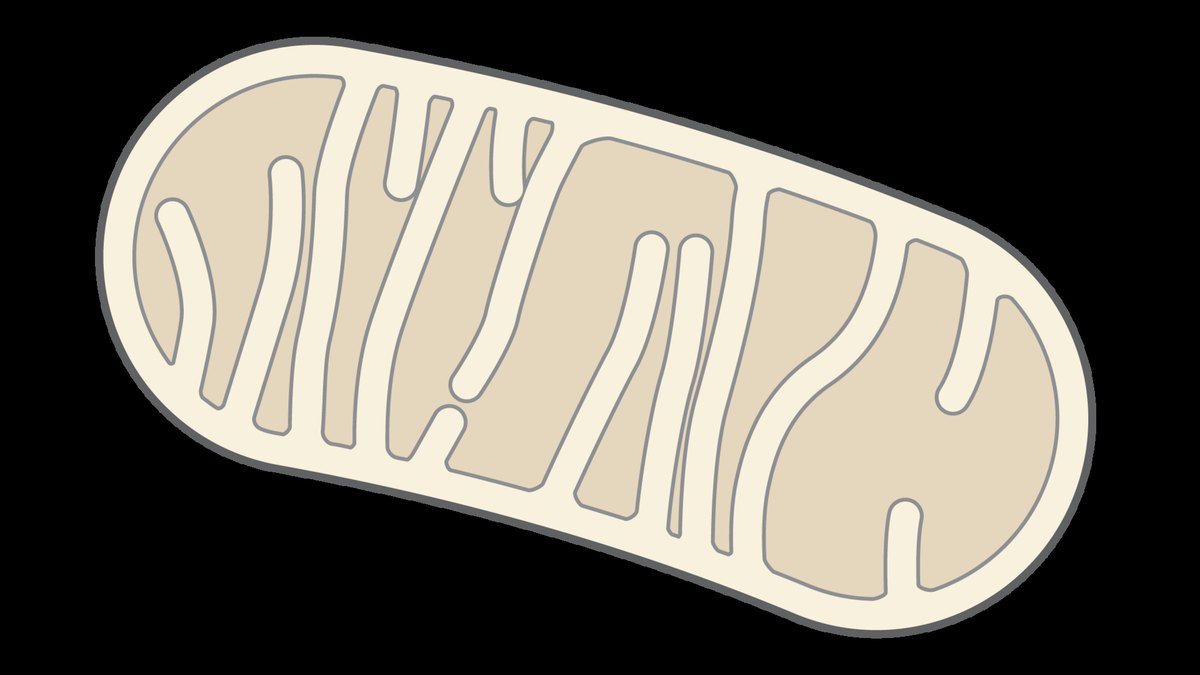
Exercise is the everyday example. When muscles work, their mitochondria raise a brief pulse of reactive oxygen; the cell reads that pulse as “prepare for more of this,” and responds by boosting its antioxidant enzymes, building new mitochondria and improving how it handles glucose. The stress makes it stronger. A well-known human study by Ristow and colleagues showed the flip side of the same coin: volunteers who took large doses of antioxidant supplements around their training lost several of the metabolic benefits of the exercise9 — because blunting the reactive-oxygen signal blunted the message that told the body to adapt. The reactive-oxygen pulse was doing beneficial work.
Hormesis reframes the whole subject. The benefit is not “more” reactive oxygen or “none” — it is the right amount, at the right time, in the right place. A living cell is exquisitely good at holding that balance, which is exactly why the reactive-oxygen family is so useful to it.
The modern literature gives the two faces of reactive oxygen their own names3. Oxidative eustress is the low, controlled kind this page is about: deliberate pulses that carry signals, arm the immune burst and train cells through hormesis. Oxidative distress is the opposite — an excessive, uncontrolled load that overwhelms the cell's balancing machinery. Same molecules; dose, place and timing decide which word applies.
Exercise is the everyday eustress. The reactive-oxygen pulse of hard work is read as a training signal, and the exercise–redox review literature maps how widely that signal reaches10,11. The Ristow study in section 5 tells the same story backwards: volunteers taking large antioxidant doses around training lost part of the adaptation9. That was one design in one population — this page reads it as evidence that the signal matters, not as a verdict on antioxidant supplements.
Panacea Bio Chem researches the redox sphere as a core focus: the same balance that makes reactive oxygen so useful inside a living cell has to be managed deliberately once a fragile molecule leaves that cell. A living cell holds its redox state in constant, self-correcting balance — producing signals when it needs them and quenching them the instant they are done. A purified peptide, protein or redox-active active in a vial has none of that living machinery; it simply sits in whatever oxygen and trace metal came along with it. Panacea's work is to supply that missing control — to hold the redox environment around the molecule in a chosen state, so the beneficial redox chemistry of the body is preserved as a principle while the molecule itself is kept intact.
The approach runs on two complementary levers — set the oxygen, and set the redox state. On the first, OxyDeplete™ — set the oxygen precisely → degasses and seals finished product with essentially no headspace and an inert backfill, so the oxygen around the molecule is held at a chosen, controlled level rather than left to chance. On the second, RedoxVault™ — hold the redox balance → keeps the molecule in a defined redox state, isolated from the stray metals and partners that would otherwise steer its chemistry — the same trace-metal reactions the body itself keeps on a tight leash. Upstream, gentle drying by Cryolapse™ — freeze-drying the way nature would → and glass-matrix stabilisation by TgShift™ — raise the glass ceiling → slow the molecular mobility that would otherwise let redox chemistry drift, holding the chosen balance in place.
The public science of redox signalling is set out above. The specific ways Panacea Bio Chem measures and holds the redox balance around a fragile molecule — the parameters, sequences and hardware that make its redox-control methods repeatable — remain proprietary to Panacea Bio Chem, held by Bogdan Dicoias. The outline is here; the recipe stays behind the door.
What is redox signalling?
It is how cells use reactive oxygen species
— superoxide (O₂•−), its protonated form
hydroperoxyl (HO₂•) and especially hydrogen peroxide (H₂O₂)
— as precise, reversible messengers. A brief, controlled pulse switches
proteins on or off, letting a cell sense its surroundings and decide when to grow,
differentiate or adapt.
Are reactive oxygen species always harmful?
No. At the low, controlled
levels a cell makes on purpose, they are among its most useful signals —
running redox signalling, powering the immune oxidative burst, and training cells
through hormesis. The body keeps them in balance with enzymes such as superoxide
dismutase, so each signal stays sharp and local.
What is the immune oxidative (respiratory) burst?
When a neutrophil or
macrophage swallows a microbe, the enzyme NADPH oxidase deliberately makes a burst of
superoxide and its partners inside the sealed pocket around it — a built-in
defence system, and a clear example of the body making reactive oxygen for benefit.
What is hormesis and mitohormesis?
Hormesis is the idea that a small,
controlled stressor makes a system stronger. Mitohormesis is its reactive-oxygen
version: a modest rise in ROS from working mitochondria — during exercise, for
example — prompts the cell to build up its defences and metabolic fitness.
Recent developments in the field — refreshed 2026-09-15 by Panacea Bio Chem.
The Panacea Technology Universe
Proprietary Panacea Bio Chem Ltd technologies, invented by Bogdan Dicoias — what each one does, and why it leads its class.
 Lyoprester®The only dual-chamber cartridge that is autoreconstitution-enabled, vacuum-sealed and argon-fillback.lyoprester.com ↗
 P-EARLs™Panacea-Engineered Aseptic Reconstitution Liquid(s) — each tuned to the peptide it wakes.p-earls.com ↗
 Peptourbillon™The layered peptide formulation architecture — single- or multi-layer, never a blend.peptourbillon.com ↗
 RF Tunnel™The RF-formed central channel through the cake.rftunnel.com ↗
 TgShift™Raises the cake’s glass-transition temperature with RF — instead of chilling below it.tgshift.com ↗
 Cryolapse™Cryogenic pressure collapse under S3Pulse™ control — vapour redistributed through the whole cake, not its surface, impeding crust formation.cryolapse.com ↗
 LyoLevit™The cake levitates and spins in high orbit — driven by ultrasound and RF.lyolevit.com ↗
 Lyochrysalis™The integrated chamber housing the whole drying stack.lyochrysalis.com ↗
 S3Pulse™The control brain for every piece of Panacea hardware.s3pulse.com ↗
 Liquiprester™The single-liquid cartridge engineered so multiple peptide APIs coexist in one shared vehicle.liquiprester.com ↗
 Syntheseract™Continuous-flow peptide synthesis in a special, very fast and economical way.syntheseract.com ↗
 CFSPPS™Continuous-flow solid-phase peptide synthesis, written as its own category.cfspps.com ↗
 OxyDeplete™Degassing plus no-headspace doctrine — the oxygen-starved seal.oxydeplete.com ↗
 ArgonLock™The final inert-atmosphere lock under argon.argonlock.com ↗
 RedoxVault™Separation, not merely suppression — redox isolation in lipid micro-reservoirs.redoxvault.com ↗
 PleniDose™The shared filling gantry — one machine filling both the dual-chamber Lyoprester and the liquid Liquiprester.plenidose.com ↗
 IncreSure™The dose-metrology layer — verified API per pen increment.incresure.com ↗
 ElimiVoid™Front-void elimination without touching the metered dose.elimivoid.com ↗
 Cryoviscous™The characterised cold, high-viscosity, low-mobility conditioning state.cryoviscous.com ↗
 Vana Machine™Vacuum Assisted Needle Accessory — vacuum conditioning and plunger-locking for the cartridge.
 EZnject™The disposable auto-injector pen built around the Lyoprester.panaceaeznject.com ↗
 Dicoias ΨThe computed-chemistry advisory — every substance reduced to a vector across physical, electronic and formulation space.dcppsi.com ↗
 SealoPrester™Aseptic Cartridge Closure System — Seal o’ Precision + Sterility.sealoprester.com ↗
 Peptidic LiquidThe peptide formulation in solution — the active plus its buffers, cryoprotectants, lyoprotectants and scaffolders.peptidicliquid.com ↗
 DiastolVAC™Biomimetic diastolic vacuum control — the pneumatic circulatory system of the machine: pumps, valves and sensors as one ensemble.diastolvac.com ↗
Publications indexed in PubMed in the last 30 days for "redox signalling" OR "redox signaling" — refreshed weekly.